
Why Consistency Beats Intensity Every Time (Especially After 45)
There's a version of fitness culture that tells you to go all in. Push harder. Train more. No days off. Earn it.
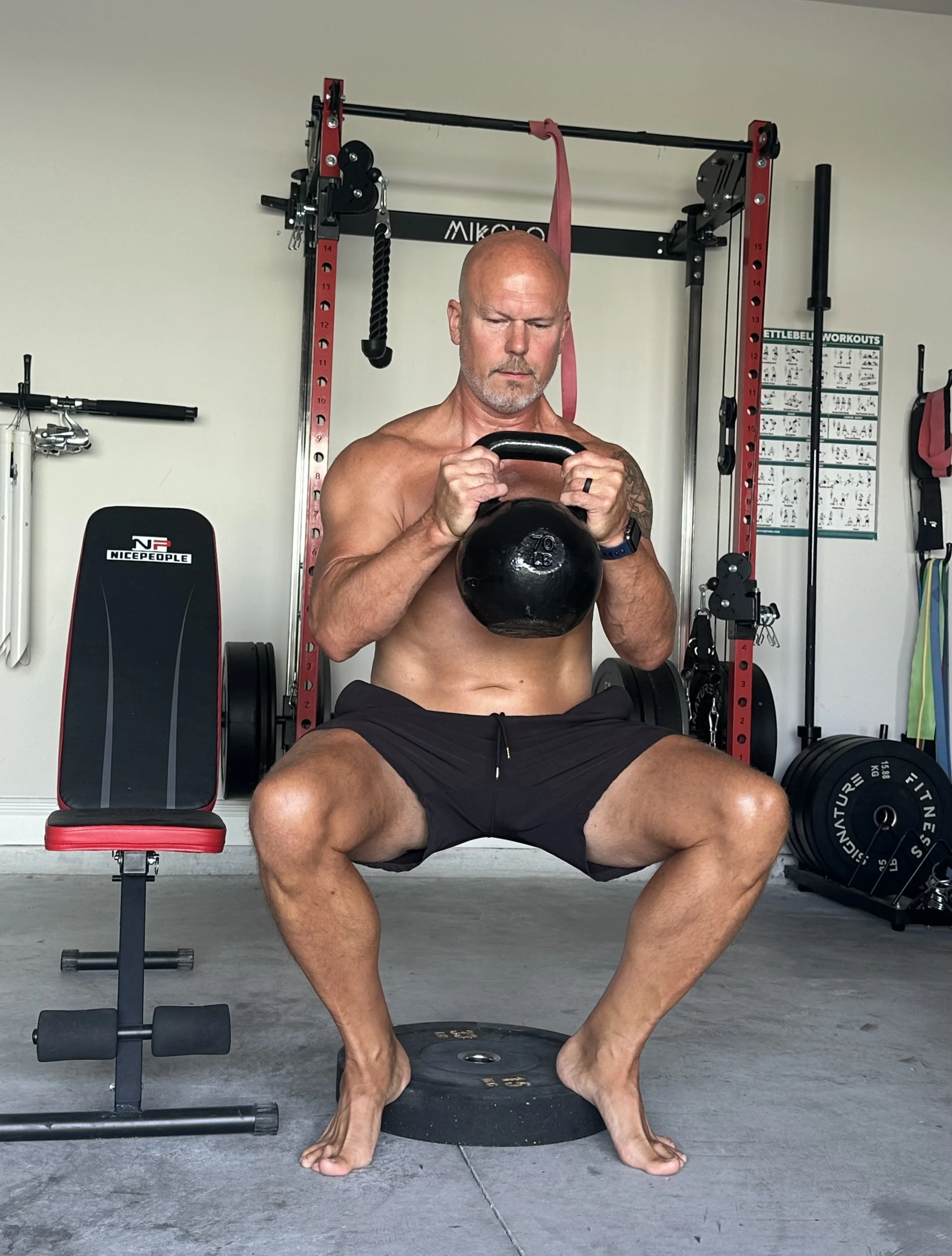
That version works for some people, for a while. Then it stops working — usually around the time injuries show up, motivation disappears, or life gets in the way for two weeks and the whole routine falls apart.
If you're over 45, you've probably seen this cycle play out more than once. And you've probably started to suspect there's a better way.
There is.
The Problem With Intensity-First Training
High-intensity training has its place. But when intensity becomes the primary goal — when more is always better and rest feels like failure — the body eventually pushes back.
After 45, recovery takes longer. That's not a complaint, it's physiology. Testosterone and estrogen levels that once accelerated muscle repair have declined. Sleep quality, which drives the majority of physical recovery, tends to decrease with age. The inflammation response that follows hard training takes more time to resolve.
None of this means you can't train hard. It means that training hard without training smart leads to a predictable outcome: breakdown.
The research backs this up. A study published in the Journal of Strength and Conditioning Research found that adults over 50 who trained at moderate intensity 4-5 days per week showed better long-term strength and muscle retention than those who trained at high intensity 3 days per week — primarily because the moderate group stayed consistent over time.
Consistency is the variable that matters most. Not intensity.
What Consistency Actually Looks Like
Consistency doesn't mean training every day. It doesn't mean never missing a workout. It means building a practice that your body and your schedule can sustain for months and years — not just weeks.
For most adults over 45, that looks like:
Frequency over volume. Three to four sessions per week, done reliably, produces better results than six brutal sessions that leave you too sore to move — or too burned out to come back.
Shorter sessions with purpose. A focused 30-45 minute workout done consistently outperforms a 90-minute session done sporadically. You don't need to do everything in one session. You need to do the right things regularly.
Built-in recovery. Rest days are not optional. They're when adaptation happens — when your muscles actually rebuild stronger, when your nervous system resets, when you come back to the next session with something in the tank. Training every day without recovery isn't discipline. It's a loan you'll eventually have to pay back.
Showing up when you don't feel like it — but knowing when not to. The athletes who last the longest are not the ones who push through everything. They're the ones who know the difference between productive discomfort and signals worth listening to.
The Mindset Shift That Changes Everything
Here's what most people get wrong: they measure their fitness by how hard any single workout was. The better measurement is how many workouts you've done over the last six months.
Think about it this way. If you train twice a week for a full year, that's over 100 training sessions. If you train six days a week for two months and then stop, that's roughly 48 sessions — and no ongoing benefit once you quit.
The person who shows up consistently, every week, for years, will always outperform the person who goes hard in bursts.
This is especially true after 45. The body responds to sustained, progressive stimulus. It doesn't respond well to shock-and-awe campaigns followed by long breaks.
Building the Habit
Habits stick when they're attached to something already in your routine and when the barrier to entry is low enough that you'll actually do it.
A few things that work:
Schedule it like a meeting. Your workout has a time and it's non-negotiable. Not because you're rigid, but because decisions made in advance don't compete with motivation in the moment. Motivation fluctuates. A calendar does not.
Start smaller than you think you need to. If you're coming back after a break, the goal isn't to prove how fit you are. The goal is to establish the pattern. A 20-minute session done consistently is worth ten times more than an ambitious program you abandon after two weeks.
Track the streak, not the performance. For the first 60 days of any new routine, the only metric that matters is showing up. Not how much you lifted. Not how fast you moved. Did you do the thing? That's it.
Give yourself permission to have a bad session. The worst workout you'll ever do is the one you skip entirely. Show up, do what you can, and go home. The habit is the goal. The results follow.
The FMS Philosophy
FMS was built on this principle. Every program, every session, every decision about structure and recovery is designed with one question in mind: can you do this next week, and the week after, and the week after that?
Strength that lasts isn't built in a single hard session. It's built in the space between sessions — and in the commitment to keep showing up.
That's not the flashy version of fitness. But it's the one that works.
Ready to build a training practice designed to last?
[Start with the free 5-Day Posture Reset Guide →]
Andy Summers is an ACE Certified Personal Trainer based in Port St. Joe, Florida, and the founder of FMS — Fitness Mindfulness Sustainability. FMS specializes in science-backed strength and posture training for adults 45+.
